

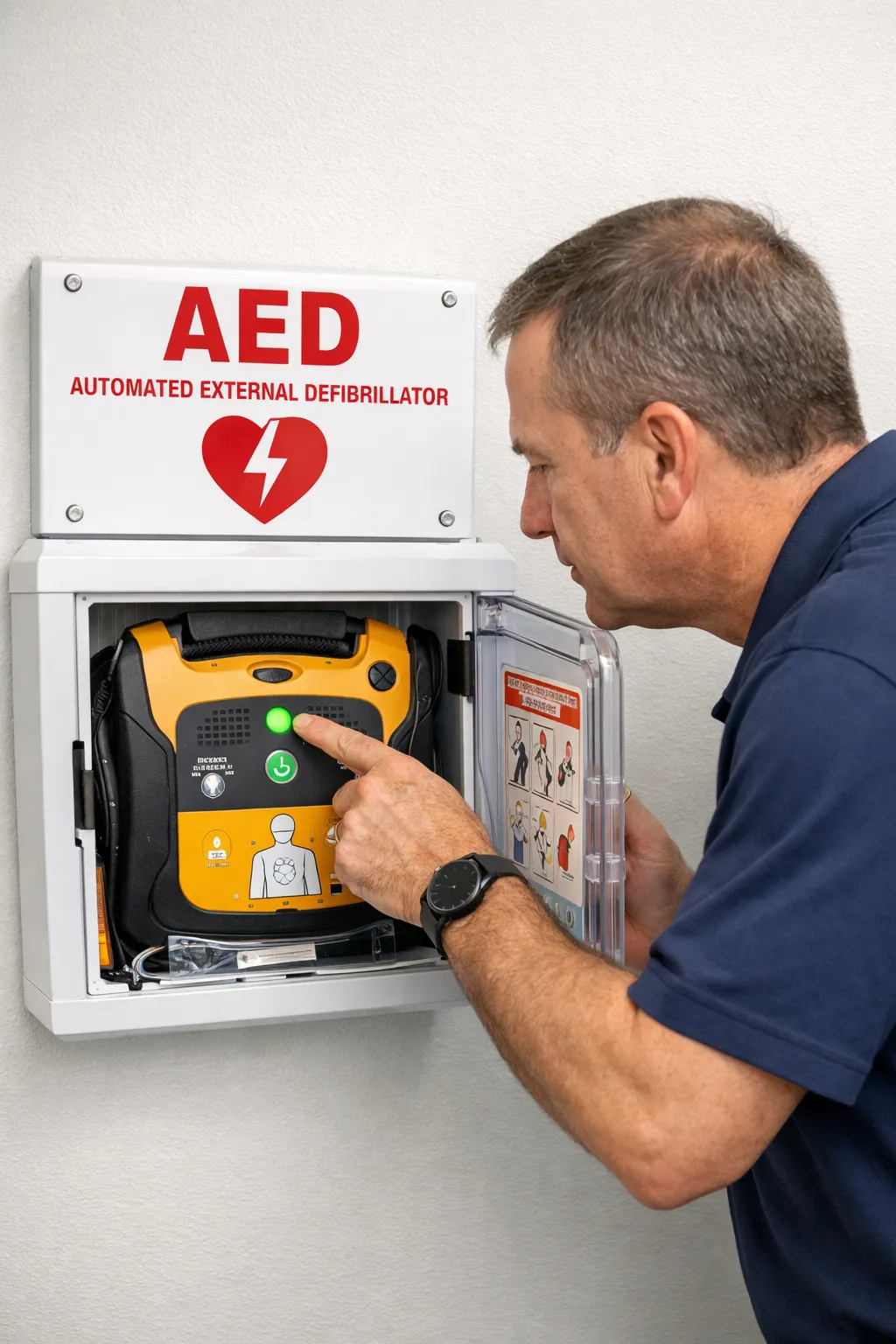
How Often Should an AED Be Inspected?
Automated External Defibrillators (AEDs) are designed to be ready when a cardiac emergency occurs. However, owning an AED is only the first step. To ensure the device works properly when it is needed, regular inspections are essential.
Many organizations ask an important question:
How often should an AED be inspected?
Monthly AED Inspections Are Recommended
Most AED manufacturers recommend that AEDs be inspected at least once per month.
A monthly inspection helps confirm that the device is ready for use and that no components need replacement.
During a typical inspection, someone should verify:
• The AED status indicator shows the device is ready
• electrode pads are connected and not expired
• The battery is installed and has not expired
• The AED cabinet and signage are visible and accessible
These quick checks help ensure the AED will function properly during an emergency.
After Every Use
AEDs should also be inspected after each use.
If the device has been used during an emergency, the electrode pads must be replaced and the device should be checked to ensure it is ready for the next incident.
Some devices may also store event data that should be downloaded according to the manufacturer's instructions.
Why Documentation Matters
Regular inspections are important, but documentation is equally critical.
Many organizations maintain inspection records to show that their AED program is being managed responsibly.
Inspection logs typically track:
• inspection dates
• equipment status
• pad and battery expiration dates
• any maintenance actions taken
Maintaining clear records helps organizations stay organized and demonstrate that their AED program is being properly maintained.
Common Challenges with AED Inspections
Many organizations start with good intentions, but eventually run into challenges such as:
• forgetting inspection dates
• losing paper inspection logs
• not noticing when pads or batteries expire
• staff turnover, leaving no one responsible
These issues can leave AEDs unprepared when they are needed most.
Keeping AEDs Inspection-Ready
Organizations that manage AED programs often use simple tools to stay organized and ensure inspections happen regularly.
Some organizations prefer physical inspection logbooks, while others use digital systems that track inspections, send reminders, and maintain records automatically.
Both approaches help ensure AEDs remain ready for emergencies.
Next Steps
If your organization manages one or more AEDs, maintaining inspection records is an important part of keeping the devices ready for use.
You can track AED inspections using the AED Inspection Logbook, or use AED Command, a digital system designed to help organizations manage inspections, responder teams, and maintenance reminders.
👉 Learn more about AED Command AED management software