

What Should Be Included in an AED Inspection Log?
What Should Be Included in an AED Inspection Log?
If your organization has an Automated External Defibrillator (AED), regular inspections are essential to ensure the device is ready for use during an emergency.
But just as important as performing inspections is documenting them properly.
Many organizations ask:
What should actually be included in an AED inspection log?
Why AED Inspection Logs Matter
An AED inspection log helps organizations:
• track routine inspections
• monitor equipment condition
• stay organized
• demonstrate proper maintenance
Without documentation, it can be difficult to confirm that an AED program is being properly maintained.
Key Information to Include in an AED Inspection Log
A complete AED inspection log should include the following:
Inspection Date
Each inspection should be recorded with the exact date it was completed.
Inspector Name
Document who performed the inspection. This helps maintain accountability and consistency.
AED Status Indicator
Most AEDs have a visual indicator that shows whether the device is ready for use. The log should confirm that the device is in a “ready” status.
Electrode Pad Expiration Date
AED pads expire and must be replaced regularly. The inspection log should track expiration dates to avoid using expired pads during an emergency.
Battery Status and Expiration
The AED battery should be checked during each inspection to ensure it is installed and within its usable life.
Physical Condition of the AED
Inspect the device and cabinet for:
• visible damage
• missing components
• accessibility issues
AED Accessibility and Visibility
Confirm that the AED:
• is clearly visible
• is not blocked
• has proper signage
Notes or Maintenance Actions
If any issues are identified, they should be documented along with any corrective actions taken.
Common Mistakes to Avoid
Organizations often run into issues such as:
• forgetting to perform inspections
• inconsistent documentation
• losing paper logs
• not tracking expiration dates
These gaps can lead to unprepared equipment when it is needed most.
Paper Logs vs Digital Tracking
Many organizations use paper inspection logs, while others use digital systems to track inspections and send reminders.
Both options can be effective, but the key is consistency.
Is Your Organization Managing AED Inspections Effectively?
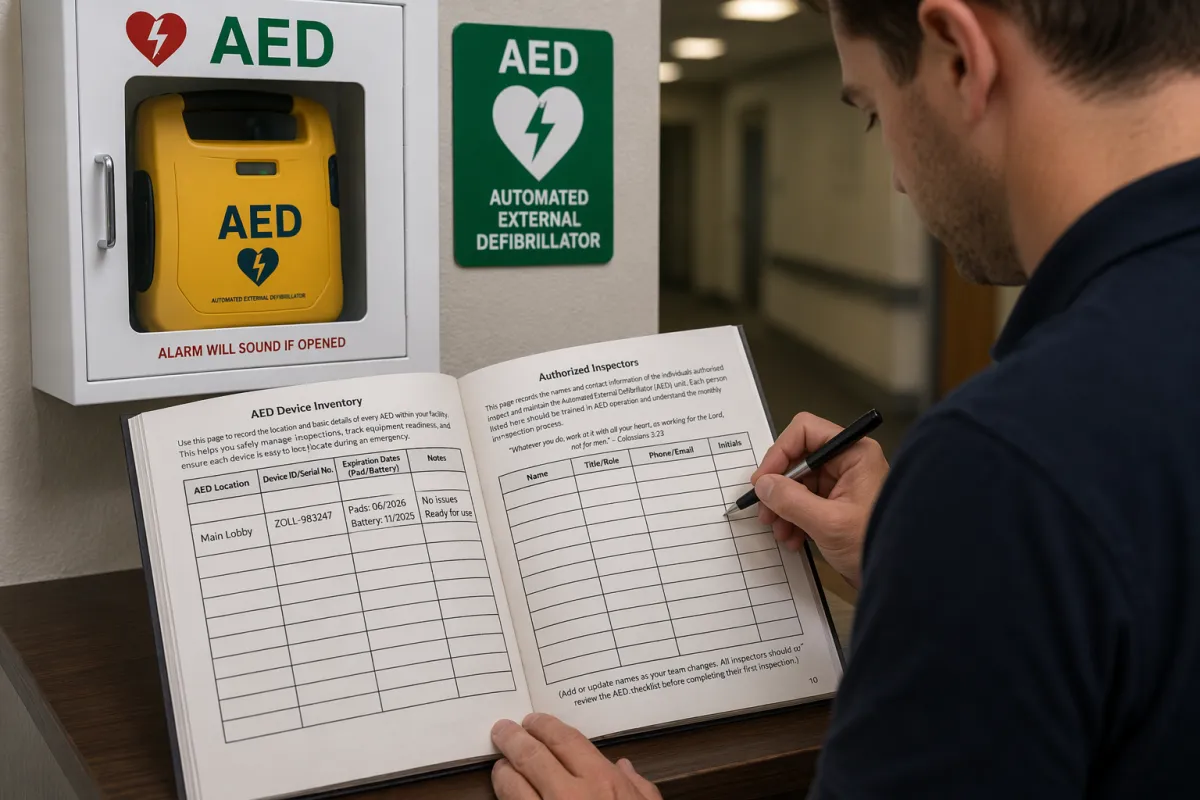
If your organization needs a simple way to track AED inspections, you can use an AED Inspection Logbook to document inspections and stay organized.
For organizations managing multiple AEDs or looking for automated reminders and tracking, AED Command provides a digital solution for managing inspections, training, and maintenance.
View the AED Inspection Logbook
Learn more about AED Command AED management software (Coming Soon)